
The use of various medicinal plants is as old as mankind. Among these, certain species of fungi have always played a significant role. The medicinal ganoderma fungus, which is the basis of ganoderma coffee, is a type of mushroom that has been used for medicinal purposes in traditional Chinese medicine for thousands of years. In ancient China it was also known as the food of emperors, as it was initially only their privilege to consume it.
The beneficial effects attributed to ganoderma fungus by ancient healers are now confirmed by medical research. As a result, it is becoming increasingly popular in Europe and Western civilisation. At a time when the vast majority of foodstuffs today contain additives, chemicals or artificial ingredients, the value of a natural ingredient with medicinal properties such as ganoderma coffee is even more invaluable.
Why this excellent medicinal mushroom is associated with coffee will, of course, be discussed later. Below we will go into more detail about the origins, ingredients and effects of this product, among other things.
About ganoderma fungus in general
As we have already mentioned above, ganoderma fungus have been consumed for thousands of years, as they are believed to have health-promoting, immune-boosting and well-being effects. It is no coincidence that it was first used in the Far East for medicinal purposes. On the one hand, ancient Chinese cultures have always believed in natural remedies to prevent disease, and on the other hand, this mushroom species grows mainly in the wet, hot, humid regions of Asia. It is a very popular and sought-after ingredient in oriental medicine, and is in such high demand in Asian countries that its cultivation is now seen as a major investment.
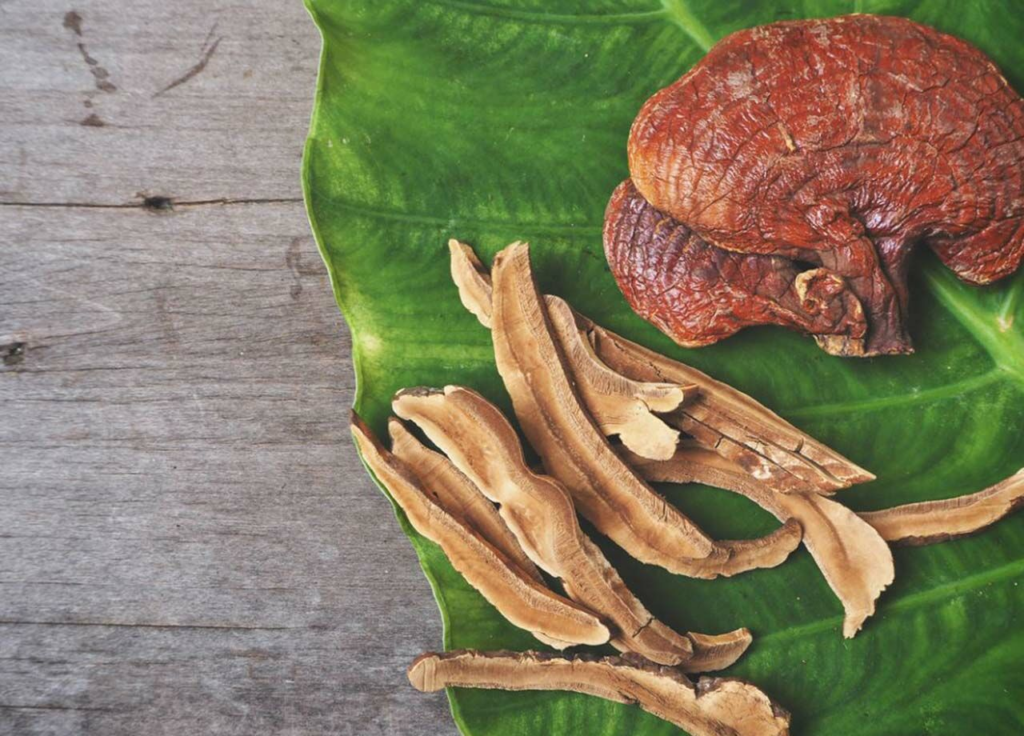
The Ganoderma genus includes many species, the one of interest to us is Ganoderma lucidum, which is the main ingredient in ganoderma coffee. It is called reishi by the Japanese, lingzhi by the Chinese, and the Hungarian equivalent is the sealing wax fungus. Its white, ocher-brown body is covered with a varnished, shiny bark. Its hat is round, semicircular or kidney-shaped, 5-25 cm in diameter, yellow-reddish-brown in colour, with a darker, purple-brown centre and a lighter, yellowish-white edge.
The biologically active substances of ganoderma fungus
Although the medicinal properties of the mushrooms have been known for thousands of years, it is only in recent decades that scientific research, much of which has been and is still being performed, has revealed the active ingredients responsible for their biological action. These are as follows:
1. Polysaccharides
The presence of a large number of polysaccharides in fungi is still the subject of much research. In particular, polysaccharides play an important role in the immune-boosting effect of ganoderma, which can, for example, help to alleviate the unpleasant side effects of chemotherapy used in the treatment of cancer. It is also important to highlight the antiviral, blood sugar, blood pressure and cholesterol-lowering effects.
2. Nucleotides
Among the nucleotides, adenosine, which is also present in the solution of ganoderma fungus, is the most important. Medical research has attributed a thrombosis-preventing effect to this, as it inhibits blood clot formation, helping blood circulation by inducing vasodilatation.
3. Terpenoids
Terpenoid-type components, like polysaccharides, are also active substances that contribute significantly to the medicinal properties of mushrooms. Some of these compounds have been shown to directly help alleviate allergic reactions, prevent the development of inflammatory processes and inhibit the release of histamine.
4. Amino acids, proteins
Ganoderma fungus contain amino acids and proteins with a structure similar to immunoglobulins. Immunoglobulins are antibodies that fight foreign substances, bacteria and viruses that enter the body.
5. Other active substances
Other active substances include organic germanium, which increases oxygen levels, improves blood circulation, stabilises collagen through its antioxidant action, helps tissue healing and improves the condition of blood vessels and capillaries.
Medicinal uses of ganoderma fungus
From the above description of the active ingredients, it is clear that one of the greatest health benefits of ganoderma fungus is their immune-boosting properties. This has a positive effect on the body in general, as it effectively supports the prevention of diseases and the maintenance of fitness. The mushrooms and their products can clearly be classified as adaptogenic in medical terminology. The adaptogenic effect is the balancing of external and internal influences on the body. Accordingly, ganoderma fungus help to maintain a healthy balance of vital functions in the body, but also increase resistance to stress.
The health benefits of ganoderma fungus also include their proven ability to alleviate or even eliminate the unpleasant side effects of radiation and chemotherapy treatments used in oncotherapy.

It is clear from the above, and from medical research, that the real value of ganoderrma fungus lies not in curing specific diseases, but in their overall immune-boosting and immune-supporting effects, and in maintaining a healthy balance in the body. These factors mean that it can be effective in preventing and treating a wide variety of diseases. In the following, we will discuss the therapeutic effects in more detail:
1. It may have an immune-boosting effect
One of the most important beneficial effects is that it supports, strengthens and stimulates the immune system by, among other things, increasing the production of immunoglobulins and activating immune effector cells. This effect helps prevent diseases from developing and, if they do develop, helps the body to fight them more effectively.
2. It may have anti-tumour effects
Studies on the effective use of ganoderma fungus in cancer were first published by Japanese researchers. Subsequently, several studies have shown that the compounds in the mushroom can promote the death of cancer cells, inhibit the formation of cancer cells, and destroy the blood vessels supplying the tumour, which may help to reduce the rate of tumour growth. In addition, they showed that there was a much lower incidence of [unfinished sentence]. These effects are mainly indirect, due to its positive effects on the immune system.
3. It may also have an effect in alleviating the side effects of chemotherapy and radiotherapy
Cancer patients undergoing chemotherapy or radiotherapy often experience unpleasant side effects, mainly due to a weakened immune system. Consuming mushrooms strengthens the immune system, which can make the side effects much milder.
4. It may have an anti-inflammatory effect
Studies have also shown that mushroom ingredients may help to inhibit the production of enzymes that are responsible for the growth of human tumours or certain inflammatory processes.
5. May have a protective effect on the liver
The hepatoprotective effect of medicinal mushrooms is mediated by complex mechanisms, most notably by an increase in antioxidant and free radical scavenging activity and an increase in protein synthesis by liver cells. This can effectively improve the condition of patients infected with chronic hepatitis B virus, for example.
6. It may have antibacterial and antiviral effects
Studies of an aqueous solution of ganoderma fungus have revealed the potential antiviral and antibacterial effects of the preparation. Most positive experiences have been observed with Helicobacter pylori, the bacterium that causes stomach infections, but the researchers have also found that the cell-damaging effects of HIV viruses have been significantly reduced.
7. May have antidiabetic effects
Clinical trials have also shown that a water-soluble extract of the mushroom may stabilise blood glucose levels, inhibiting the rise in blood glucose levels after sugar ingestion, while not increasing blood insulin levels. Research shows that it can be used effectively in people with type II diabetes.
8. May have cardiovascular supportive effects
The beneficial effects on the cardiovascular system are mainly based on lowering harmful cholesterol levels, normalising high blood pressure and improving the resistance of blood vessels.
Overall, the medicinal uses of ganoderma fungus fit in well with the Far Eastern approach to medicine, which focuses on the health and balance of the human body as a whole, with a strong emphasis on prevention and the use of natural ingredients. The potential beneficial effects of mushrooms have been proven and discovered by modern Western medicine through numerous studies, and an increasing number of practitioners recommend their consumption for health maintenance, immune strengthening and disease prevention.
The relationship between ganoderma fungus and coffee
Anyone who has taken medicinal products or supplements in their life will be familiar with the feeling that they have often forgotten to take them or taken them late. That is why it was very practical to add ganoderma fungus to coffee in the form of an extract, as the vast majority of people drink coffee, which they certainly do not forget to drink in the morning or at some point during the day, depending on their coffee drinking habits.